

Introduction
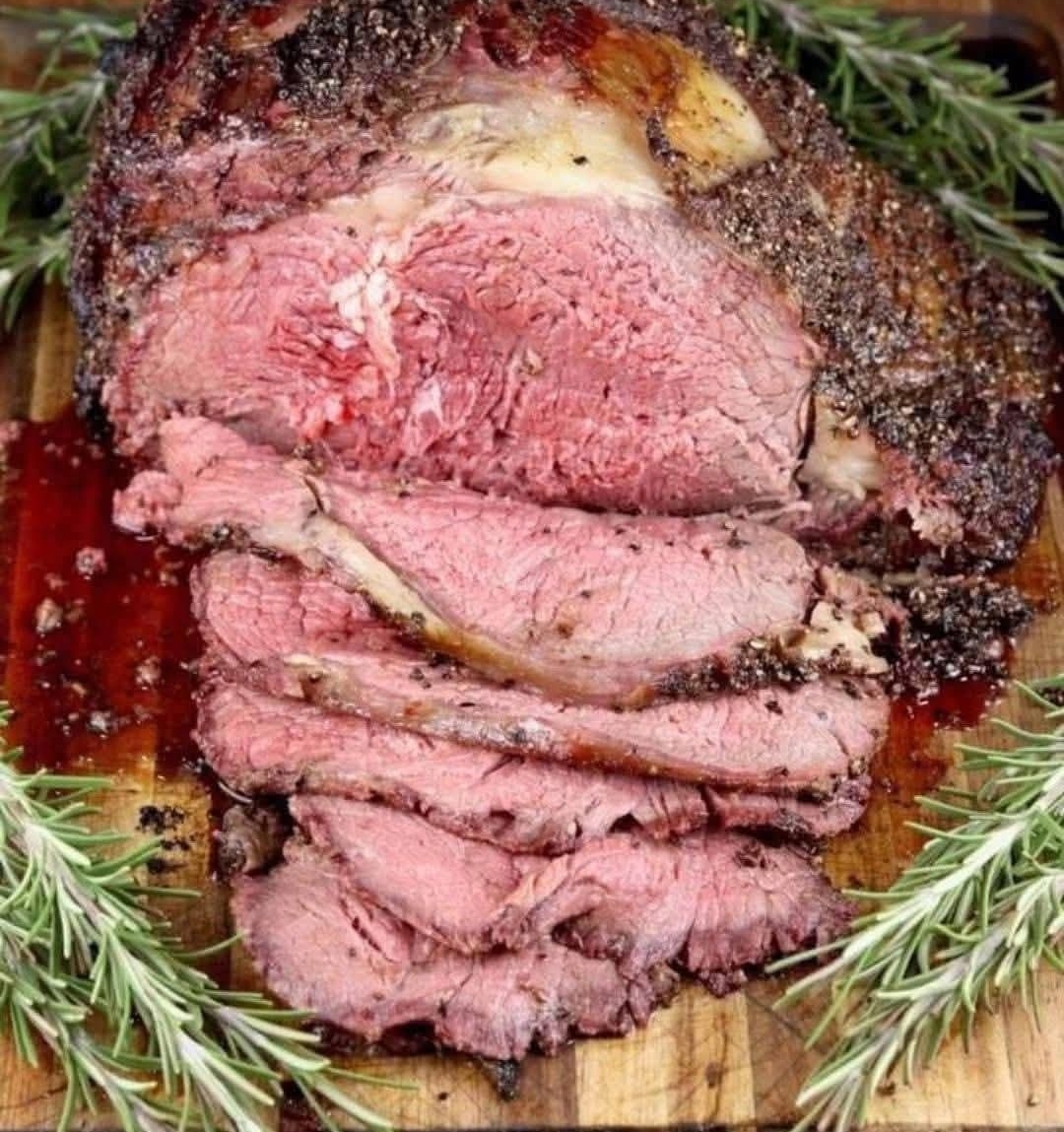
Prime rib, also known as standing rib roast, is one of the most luxurious cuts of beef and a centerpiece for holiday meals or special occasions. When cooked properly, it delivers a tender, juicy interior with a beautifully seasoned crust. The secret to perfect prime rib every time lies in using the right roasting method, letting the meat rest, and carving it with care. This recipe balances simplicity with precision, ensuring melt-in-your-mouth results that will impress every guest at the table.
Ingredients
1 prime rib roast (5–7 lbs), bone-in preferred
3 tbsp olive oil or softened butter
4 cloves garlic, minced
2 tbsp fresh rosemary, finely chopped (or 2 tsp dried)
2 tbsp fresh thyme, finely chopped (or 2 tsp dried)
2 tsp kosher salt (more if roast is larger)
2 tsp black pepper
1 tsp onion powder (optional)
1 tsp paprika (optional, for color)
Instructions
Prepare the roast: Remove the prime rib from the refrigerator at least 2 hours before cooking so it comes to room temperature. Pat dry with paper towels.
Preheat oven to 450°F (230°C).
Season generously: Rub the roast all over with olive oil or butter, then coat with garlic, rosemary, thyme, salt, pepper, and any optional spices.
Initial sear: Place the roast, bone-side down, in a roasting pan with a rack. Roast at 450°F for 15–20 minutes to create a browned crust.
Lower temperature: Reduce oven temperature to 325°F (165°C) and continue roasting until desired doneness (use a meat thermometer):
Rare: 115–120°F (46–49°C)
Medium rare: 125–130°F (52–54°C)
Medium: 135–140°F (57–60°C)
Rest the roast: Remove from oven, tent loosely with foil, and let rest for 20–30 minutes before carving. The internal temperature will rise about 5–10°F during resting.
Carve and serve: Slice against the grain into thick slices and serve with au jus or horseradish cream.
Description
This prime rib is tender, juicy, and full of flavor, with a golden-brown crust infused with herbs and garlic. The meat stays succulent thanks to slow roasting, while the initial high-heat sear locks in juices. Resting the roast ensures even distribution of juices, giving each bite a melt-in-your-mouth quality.
Tips
Always use a meat thermometer for accuracy—guessing can easily overcook this premium cut.
Let the roast rest at room temperature before cooking for even results.
Use a roasting rack to allow air circulation and even cooking.
Save the pan drippings to make a simple au jus (add beef broth and simmer).
For extra flavor, dry-brine the roast by salting it 24 hours ahead and leaving it uncovered in the refrigerator.
Variations
Garlic-crusted prime rib: Mix softened butter with garlic and herbs to create a paste and rub it thickly over the roast.
Mustard rub: Add Dijon mustard to the seasoning rub for a tangy crust.
Smoked prime rib: Cook low and slow in a smoker with wood chips for a smoky depth of flavor.
Reverse sear: Cook low at 250°F (120°C) until nearly done, then sear at high heat (500°F/260°C) for 10 minutes to finish.
Correction
A common mistake is cooking prime rib straight from the fridge, which leads to uneven doneness—always let it rest at room temp before roasting. Another issue is skipping the resting period after cooking, which causes juices to run out and dry out the meat. Over-seasoning with too much garlic or salt can also overpower the natural flavor of the beef—keep it balanced.
Enjoy
Serve your Perfect Prime Rib hot and juicy with classic sides like creamy mashed potatoes, roasted vegetables, Yorkshire pudding, or a tangy horseradish sauce. Whether for Christmas dinner, a special celebration, or a weekend feast, this show-stopping roast guarantees an unforgettable meal every time.